Some Hopeful News
For many months now, the lead story in our monthly newsletter has focused on one of the latest attacks on science and conservation posing serious threats to the sustainability of our planet. I was contemplating what would be the lead story this month – there seems to be an endless supply – but I found myself avoiding tackling the next installment of concerning news.
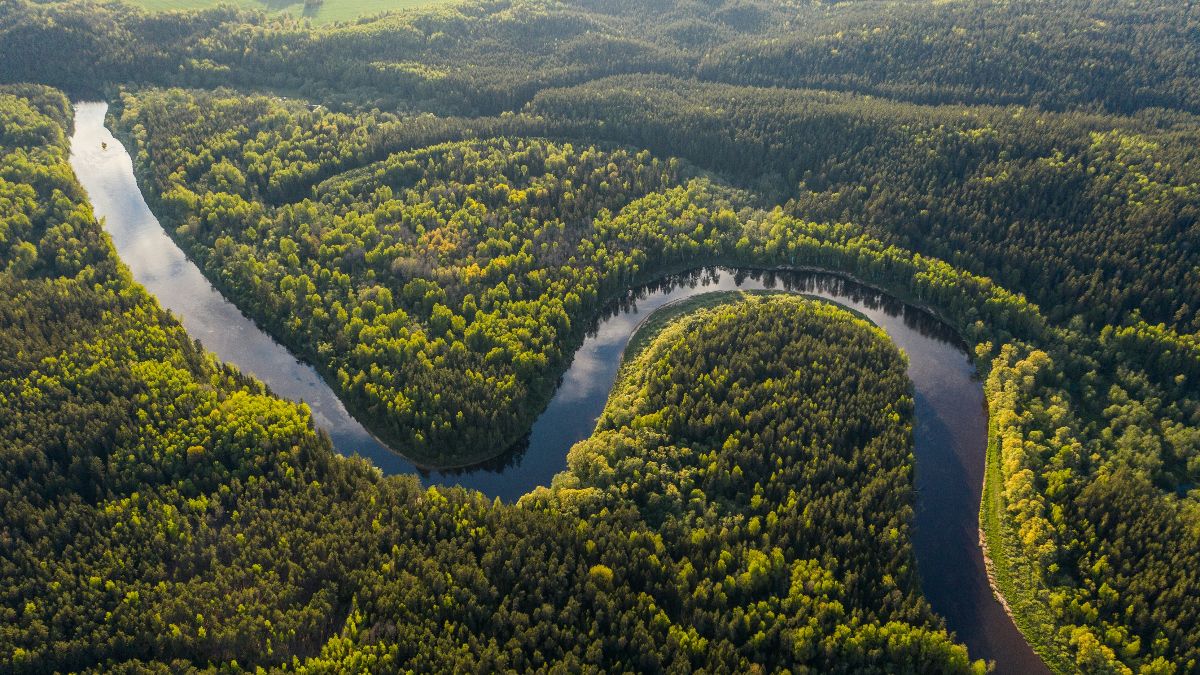
Then, I read an update on the Brazilian rainforest and felt a rush of genuine hope. So I decided to set my list of concerns aside and share some good news for a change in the hope you will feel some uplifting too. Indigenous communities vehemently opposed the Brazilian government giving access to the Tapajos River as an export corridor for animal feed plantations by giant agribusiness companies, which would likely have led to serious ecological impacts. Because of the commitment by local communities, the Brazilian government recently announced it will revoke the permit giving access to the river. In a statement by the Tapajos and Arapiuns Indigenous Council, “What won today was life. The river won, the forest won, the memory of our ancestors won.”
There is more good news – the Amazon hit its lowest deforestation rate in over a decade. In the past, gains in the Amazon usually came at the expense of the neighboring Cerrado savanna, but not this time. The deforestation rate there also declined.
These may be seen by some as minor victories in the fight to save life on this planet, but these are important victories. They have significant on-the-ground benefits that are worth celebrating. Additionally, it demonstrates how, at a time when the attack on the natural world by powerful forces seems overwhelming, the people can be catalysts for change and when they work with other decision makers can deliver big results. What else can we accomplish?
Draft Southern Sierra Nevada Fisher Habitat Dashboard Released
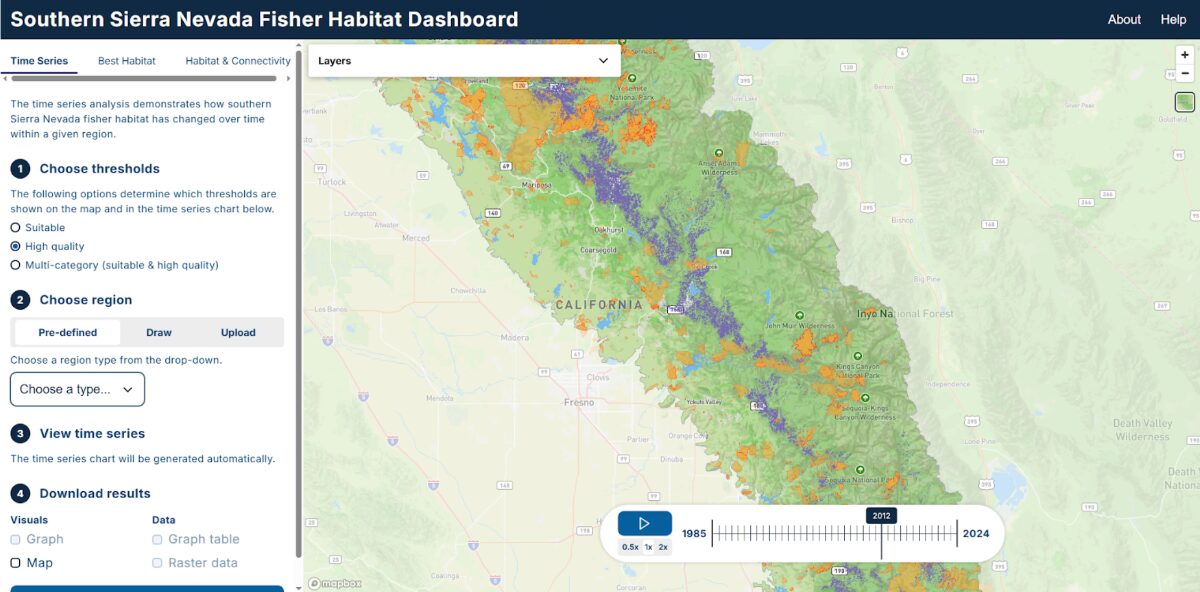
The Southern Sierra Nevada Fisher, a distinct population of the Pacific fisher (Pekania pennanti), was listed as an endangered species by the U.S. Fish and Wildlife Service in 2020. CBI, led by Dr. Wayne Spencer as principle investigator, is coordinating a multi-agency initiative to conserve and recover the species, which faces ongoing threats from high-severity wildfire, habitat fragmentation, and rodenticide exposure.
As part of an updated Conservation Assessment and Strategy of the species, the CBI team has developed an easy-to-use online dashboard to provide information on changes to fisher habitat from 1985 to 2024 based on a type of automated wildlife habitat monitoring system developed by scientists at the USFS Rocky Mountain Research Station and collaborators called the “Living Maps”.
The draft dashboard includes three primary tabs…
Time Series
Users can visualize and graph suitable habitat, high-quality habitat, or both for a predefined region, user-drawn polygon, or uploaded boundary. The tool displays habitat trends from 1985 to 2024, with additional years to be incorporated as new Living Maps data become available. Results can be downloaded in both graphical and map formats.
Habitat & Connectivity
This section presents changes in fragmentation metrics relevant to fisher ecology across the seven principal habitat core areas, along with connectivity modeling results spanning the full 1985–2024 period across the broader region.
Best Habitat
Designed specifically for land managers, this tab identifies contiguous blocks of high-quality habitat that overlap a user-defined project area by at least 60 acres, supporting project planning and conservation prioritization.
Dr. Wayne D. Spencer – Recipient of the Raymond F. Dasmann Professional of the Year Award
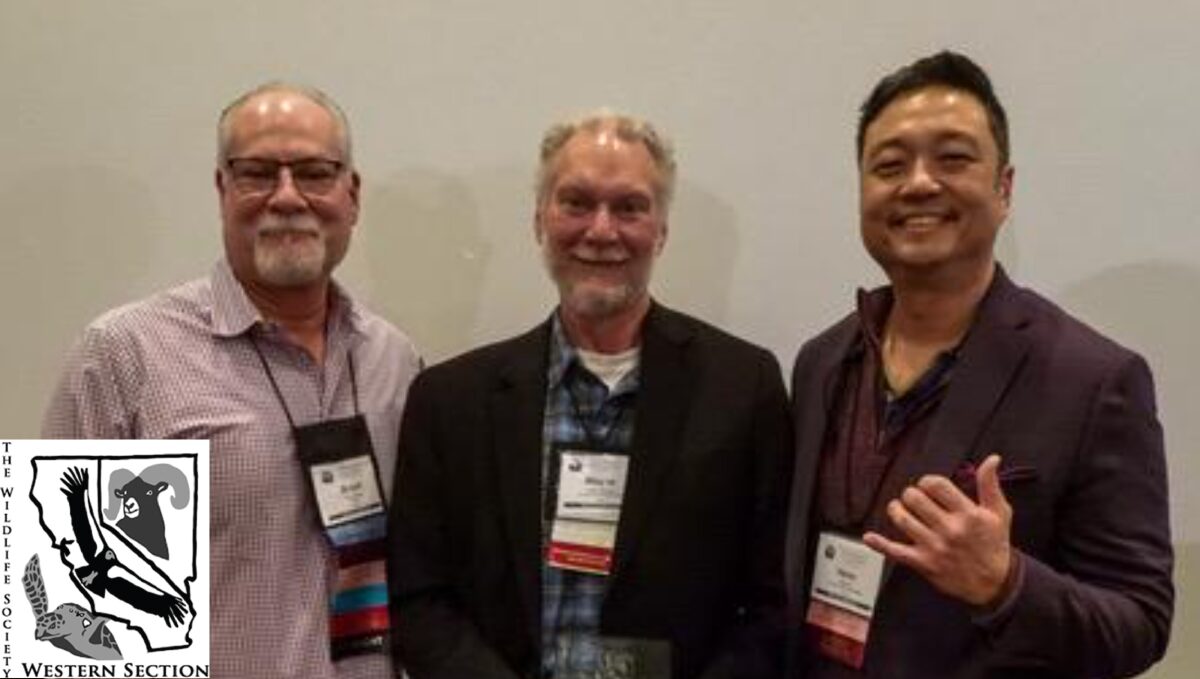
At a recent meeting of the Western Section of the Wildlife Society, Dr. Wayne Spencer (long-time Senior Scientist at CBI) was awarded the Dasmann Award, which is the most prestigious award by the Society honoring wildlife professionals who have made an outstanding contribution to wildlife resources management and understanding in California, Nevada, Hawaii or Guam. A tremendous and well-deserved honor. Congratulations, Wayne!
Celebrating Our Associate, Dr. Dominick A. DellaSala
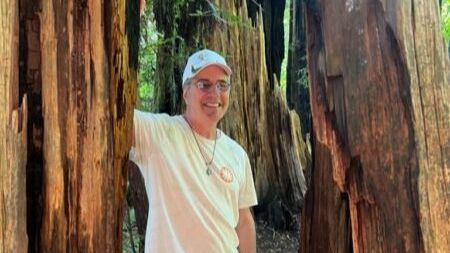
We also wish to congratulate our Associate, Dr. Dominick A. DellaSala, on receiving a 2026 Planet Earth Award from the Alliance of World Scientists. Dominick’s decades-long career in global biodiversity conservation, forest ecology, and climate science reflects an extraordinary commitment to protecting ecosystems and advancing evidence-based conservation policy. From peer-reviewed science to congressional testimony, public education, and influential writings, his work bridges rigorous research with impactful advocacy — embodying the values of the Planet Earth Award.