The Bee and the Overdraft

Last week brought National Pollinator Week, a modest nod to the bees, butterflies, and moths that quietly make roughly 75 percent of our food crops possible. And let’s not forget birds, bats, and even rodents. Later this month comes a very different kind of marker: Earth Overshoot Day, now July 30, the date when humanity’s demand on nature outruns what the planet can regenerate in a year. From this date to the end of December, we’re living on borrowed biological capital.
At first glance, these two observances seem to belong to very different conversations — one a celebration of small, specific creatures, the other a sobering piece of planetary accounting. But they’re really telling the same story from opposite ends.
Overshoot is a global figure built from billions of local decisions about land and use. Pollinators live that story locally: a bee doesn’t care about hectares of biocapacity, only whether there’s undisturbed soil to nest in or a stretch of yard that hasn’t seen pesticides. The overdraft we’re running as a species is, in part, the sum of landscapes we’ve made increasingly inhospitable to the organisms that keep them functioning.
The biggest gains will come from energy systems, agricultural policy, and global supply chains – not yards. But overshoot isn’t only a policy problem; it is also a local landscape problem, and landscapes are made of yards, roadsides, business parks, and vacant lots that ordinary people and communities have direct influence over. A few places to start:
- Let part of the yard go a little wild. Unmanicured soil and leaf litter are habitat, not neglect — most native bees nest in the ground.
- Convert a portion of your lawn to a diversity of flowering plants, so something’s blooming spring through fall.
- Skip the chemicals, even the “safe-sounding” broad-spectrum kinds. They rarely distinguish between the pest and the pollinator.
- Add water: Provide a simple birdbath or shallow water dish with rocks so animals can land and drink safely.
- Dim the outdoor lights. Artificial light at night disrupts moths and other nocturnal pollinators more than most people realize.
- Support the policies and organizations doing this at scale — habitat restoration, farmland conservation, and the kind of connectivity planning that lets wildlife move through a landscape rather than being boxed into fragments.
None of this alone moves Earth Overshoot Day. But the intention behind it — restoring a little untidiness, a little wildness, a little tolerance for the organisms we’ve spent a century engineering out of view — is precisely what Earth overshoot asks us to recover. The date on the calendar is a global ledger. The yard is where many of us can actually get to make a deposit.
For more information on what you can do to your own yards
- NWF’s native plant finder
- Pollinator Pathway
- Pollinator Partnership (especially their ecoregional planting guides)
- CBI’s Conservation Reserve Program Plant Finder and Vendor Match
- Ecoregional Revegetation Application
CBI to Attend Upcoming United Nations International Meetings

CBI will also be represented at two major United Nations convention meetings.
At the UN Convention to Combat Desertification (UNCCD) summit in Ulaanbaatar, Mongolia (August 2026), CBI will co-organize an official side event with Cambodia’s Ministry of Agriculture, Forestry and Fisheries on restoring agricultural and forest soils.
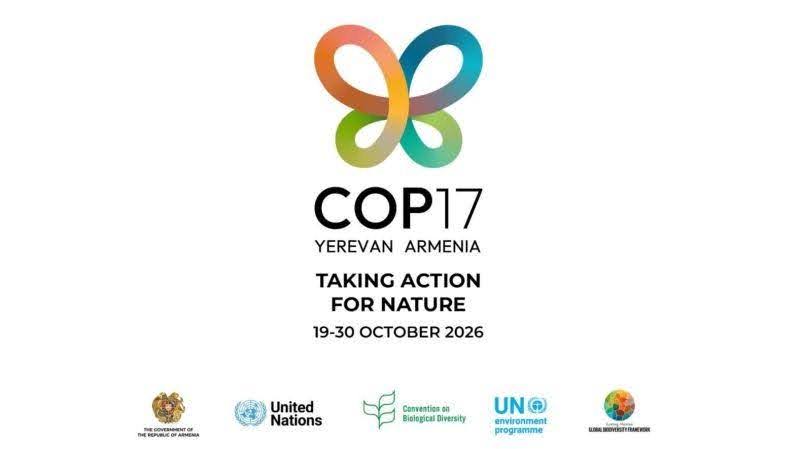
At the Convention for Biological Diversity (CBD) summit in Yerevan, Armenia (October 2026), CBI has proposed an official side event on wildfire resilience and biodiversity protection, co-organized with IUCN and proposed participation from partner ministries in Colombia, Cambodia, Madagascar, and Zimbabwe.
CBI has also been invited to participate in additional pending side events highlighting links between biodiversity and human health, and Indigenous-led approaches for improving forest health.
These events reflect a broader strategy to strengthen international cooperation on wildfire resilience. Through the Global Wildfire Collective, CBI has proposed a Joint Work Programme on Wildfire Resilience under the CBD, UNCCD, and UN Framework Convention on Climate Change. The proposal has received written support from 36 National Focal Points representing 30 Parties to date, with interest continuing to grow. Building on this momentum, CBI is now exploring opportunities for capacity building for national ministries through the GWC Academy to help translate international commitments into practical action. Watch this space for more.
CBI Welcomes Our Newest Board Member, Priyal Patel
Priyal Patel brings a foundation in environmental policy and finance to the CBI board, with an early stage career focused on directing corporate efforts toward conservation, climate resilience, and sustainability.

A 2026 graduate student in the inaugural M.S. Climate Finance class at Columbia University, she has taken coursework spanning Columbia Climate School and Columbia Business School. Priyal also holds a B.S. in Environmental Policy and Environmental Business Economics from Rutgers University. Her work bridges environmental science and capital markets across the public, private, and nonprofit sectors, with experience in ESG disclosure, climate risk analysis, and sustainable finance.
She has analyzed emissions and disclosure frameworks at Diligent Corporation and coordinated multi-stakeholder sustainability initiatives with Hawaiʻi Green Growth. Her academic career reflects a commitment to translating environmental science into the financing mechanisms, investment decisions, and impact-measurement frameworks that drive a healthier, more ecologically sustainable planet. We are excited to have Priyal bring her expertise and enthusiasm to the board.