Fixing Forests or Fast-Tracking Risk?
Examining the Fix Our Forests Act
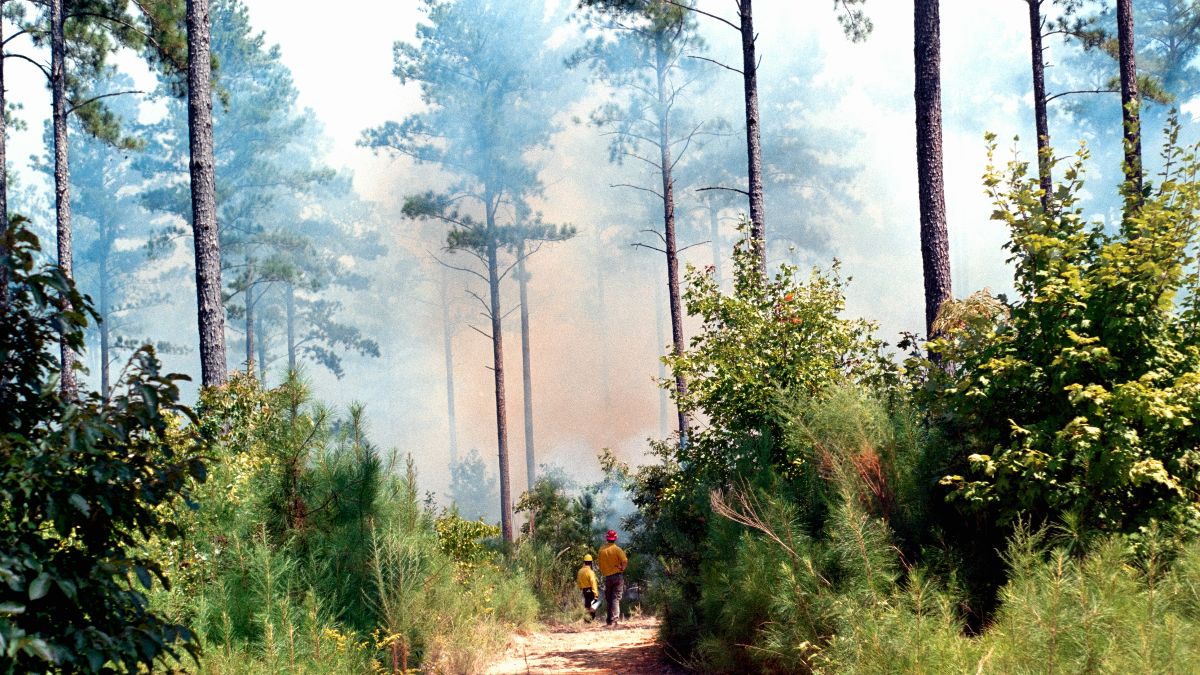
Catastrophic wildfires are now a recurring headline across much of the western United States—millions of acres burned, lives disrupted or lost, and communities and livelihoods destroyed. Public concern is both justified and urgent, and people are increasingly looking to government leaders for meaningful action.
In response, policymakers have advanced the Fix Our Forests Act, which is moving through Congress with bipartisan support, but the Act may not achieve its stated wildfire risk reduction goals.
While the Act contains several components, its core approach prioritizes faster and more expansive forest fuels treatments such as mechanical thinning and prescribed fire by rolling back long-standing environmental safeguards that have guided federal land management for decades. The legislation also significantly curtails public and Tribal oversight and sharply limits judicial review, compressing the window for legal challenges from six years to just 150 days. Without adequate time to challenge implementation, how can accountability be maintained?
Although the Act contains provisions that are broadly supported by the environmental community, such as increased support for wildland firefighters and their families in cases of serious injury or death, it has also created significant divisions within the conservation community. Concerns about weakened environmental protections and reduced public participation are well founded; however, more fundamentally, there are legitimate scientific questions about whether the forest management activities promoted by the Act will achieve their intended outcomes.
When fuel treatments are carefully designed and matched to forest type, they can enhance ecological resilience and reduce wildfire risk. However, applying inappropriate treatments in unsuitable ecosystems (such as chaparral) can produce the opposite outcome. Concerns also remain about provisions allowing treatment of very large areas (up to 10,000 acres) without full environmental safeguards. If treatments are poorly sited or insufficiently tailored, they may simplify forest structure by reducing structural complexity and canopy cover, resulting in drier surface fuels and increased oxygen availability that can intensify fire behavior following ignition. In addition, the expanded access needed to implement and maintain large-scale treatments often requires temporary or permanent road construction, a well-established driver of human-caused wildfire ignitions. Together, these risks highlight the importance of careful siting, scale-appropriate implementation, and integration of fuel treatments within a broader, science-based fire management framework.
The Fix Our Forests Act represents a predictable response to an escalating wildfire crisis, but despite its intent, it poses significant risks to both forest ecosystems and the communities it seeks to protect. Assuming the Act passes, what happens if treatments fail or increase risk? What safeguards exist to course-correct? The Fix Our Forest Act is a high-stakes experiment with reduced safeguards and severely limited mechanisms for correction. It would be prudent to require meaningful monitoring and enforceable triggers to make the necessary revisions.
New Data Basin Gateway Launched
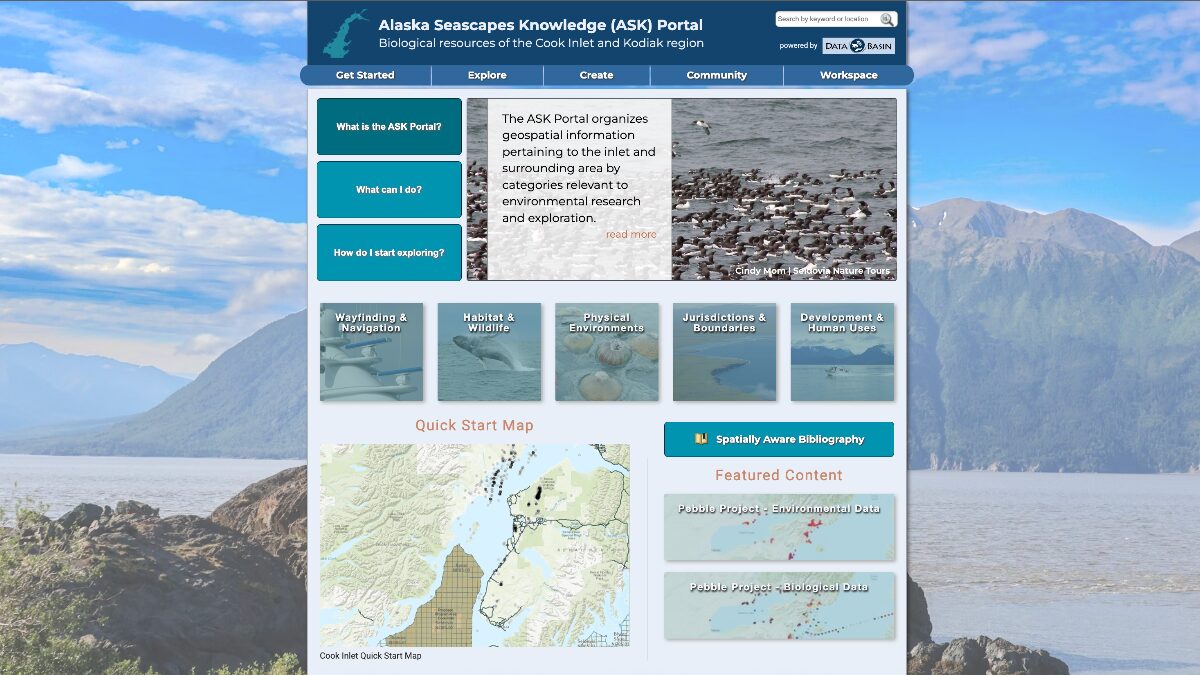
The latest Data Basin Gateway, the Alaska Seascapes Knowledge (ASK) Portal, launched last week. In partnership with Bureau of Ocean Energy Management (BOEM), Alaska Department of Fish and Game, and Nuka Research, the focus of the gateway is to provide a collaborative, online platform to contribute and organize geospatial information pertaining to Cook Inlet and the Kodiak region of the state. The integration of the rich existing and growing datasets and supporting documentation empowers users to make better decisions for ecological sustainability of these valuable marine and coastal environments.
Different Trees, Same Rules: What Shapes Tropical Forest Diversity Worldwide
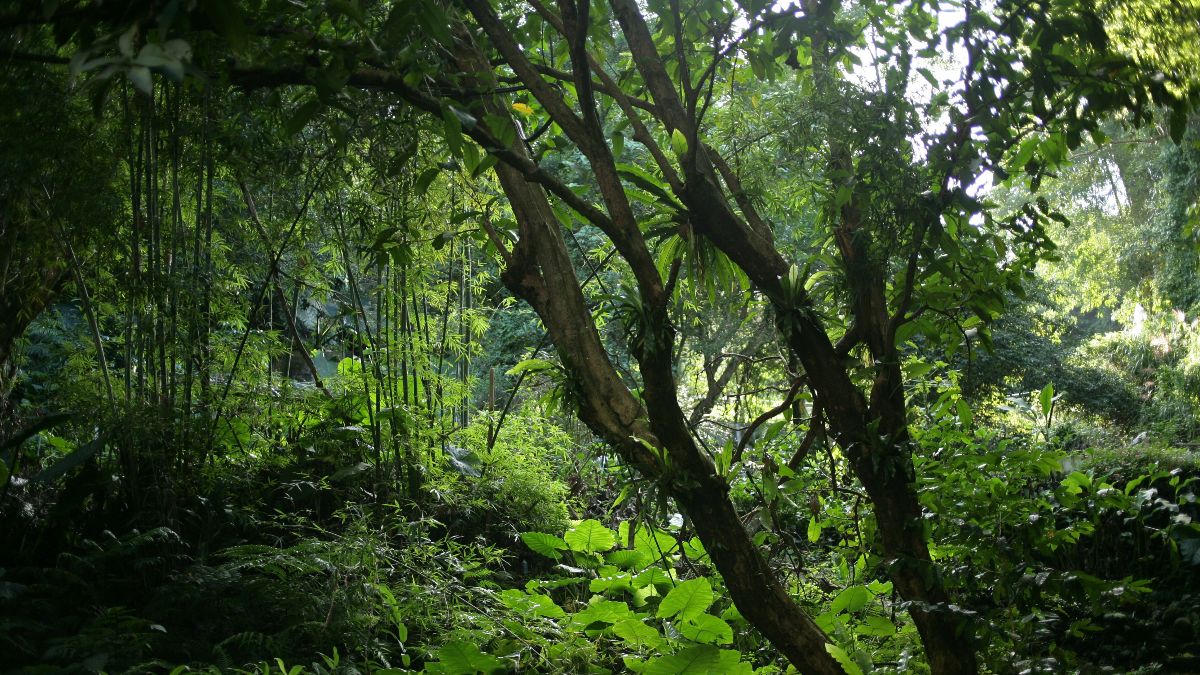
Tropical regions differ a lot in how many kinds of trees they have overall. The tropical Americas, for example, have many more tree species than Africa or Southeast Asia. So 115 researchers from around the tropics wanted to know whether these big differences also show up at smaller, local scales and whether the same kinds of environmental conditions shape tree diversity in all tropical regions, even though they contain very different tree species.
To test this, researchers used data from 429 one-hectare forest plots across the tropics and combined it with information on climate, soils, and terrain. Using a machine-learning model, they predicted how many tree species occur in each plot. Together, environmental factors explained about 86% of the differences in tree diversity from place to place.
Even though tropical regions have very different evolutionary histories and species, the way local tree diversity responds to environmental conditions is remarkably similar across continents. This suggests that the same basic environmental factors shape how many tree species can coexist in a place, no matter which species are present.
These results point to a strong and widespread role for environmental “niches” in determining local tree diversity across the tropics and they raise an important challenge for ecologists to explain why these patterns are so consistent worldwide.