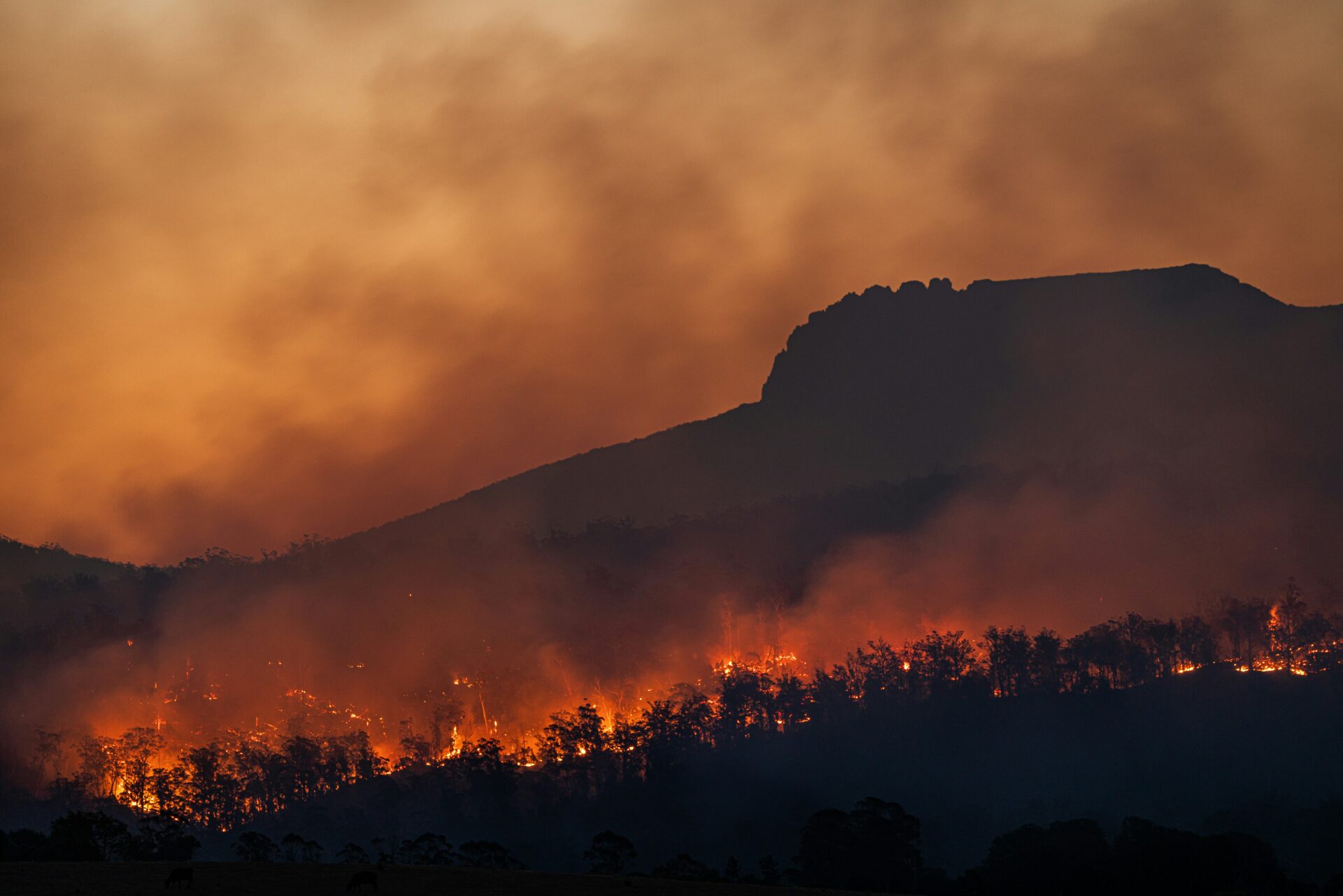
Wildfires are transforming ecosystems and threatening communities across the globe, but not in the same way everywhere. Fire regimes are shifting differently region by region, shaped by distinct combinations of climate, land use, vegetation, and human settlement patterns. A management strategy that improves resilience in one place can backfire in another. In 2024, Conservation Biology Institute (CBI) launched the Global Wildfire Collective (GWC) to help close this gap—creating a central, international hub where fire science, policy, and lived experience can meet, and where lessons learned in one region can be responsibly translated for use in another.
FIRE:NET builds on the GWC’s early momentum, during which the initiative grew to include more than 42 charter member experts and 14 partner institutions, representing 26 countries, launched a multilingual discussion forum, and secured endorsements from United Nations focal points in more than 23 countries for a proposed Joint Work Programme on Wildfire Resilience and Recovery. This project puts that foundation to work through a comparative research design built around three contrasting regions: California and south-central Chile, a classic pair of Mediterranean-climate systems whose shrublands evolved independently yet converged on strikingly similar form, and the Colombian Amazon, a tropical moist-forest frontier where fire is largely new to the landscape. Together, the three sites form a controlled comparison nested within a strong ecological and social contrast—letting the team ask which drivers and impacts of fire activity generalize across very different fire systems and which are highly context-specific.
Across all three regions, researchers are already seeing a shared trajectory: a shift toward more flammable, non-native-dominated vegetation. But the trigger differs by region. In California, short-interval fire and climatic drying are converting native chaparral shrublands to flammable invasive grassland. In the Colombian Amazon, fire promotes invasion by pasture and cerrado grasses that make the landscape more fire-prones. In Chile, decades of subsidy-driven pine and eucalyptus plantation expansion built a flammable landscape that recent megafires have since consolidated. What generalizes is the feedback loop and the flammable endpoint; what is context-specific is the trigger and the vegetation that replaces the native system—exactly the kind of divergence in mechanism and convergence in outcome, that the project is designed to test.
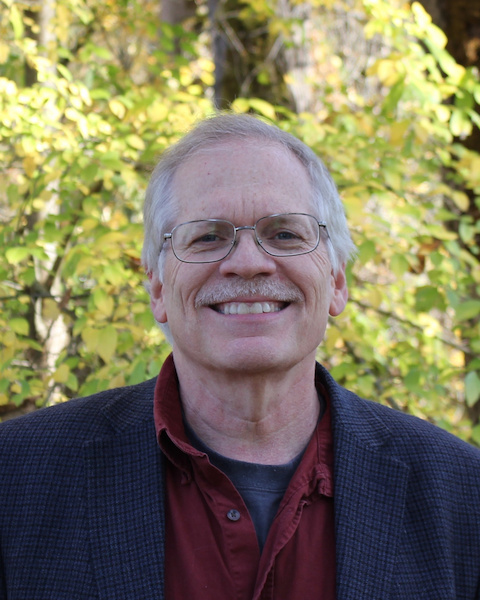
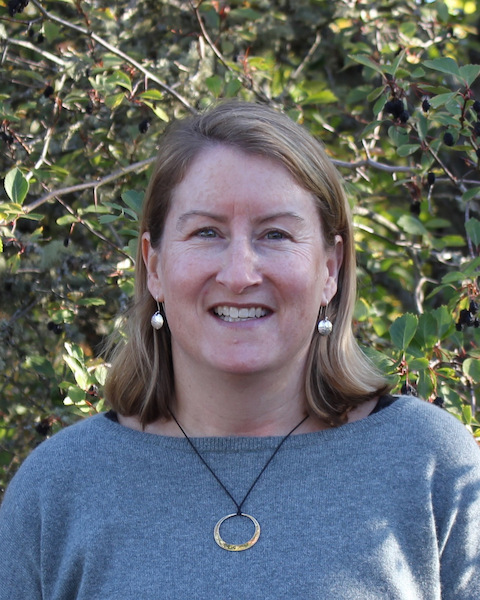
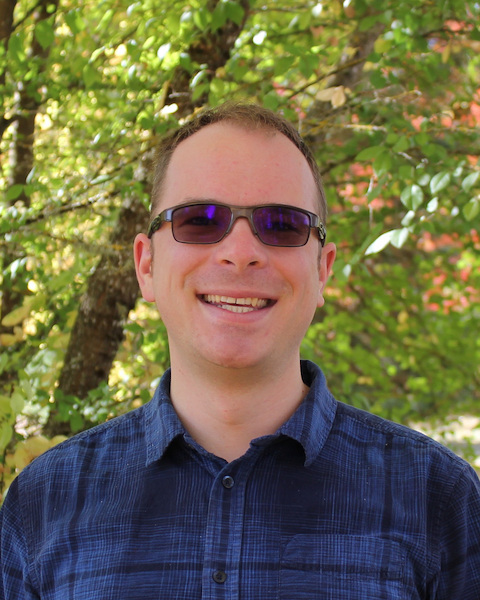
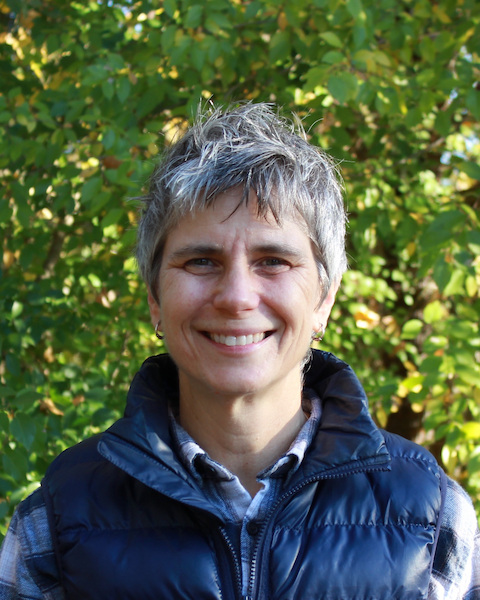
The research unfolds through three coordinated components. The first, led by Andrés Holz and Jonathan Fink of Portland State University, characterizes each region’s coupled human-natural fire system—its historical and altered fire regime, its ecological transformation trajectory, and its human exposure, vulnerability, and Indigenous and local relationships to fire—and co-produces living resilience roadmaps from that synthesis. The second introduces a new Wildland-Human Interface (WHI) typology, led by CBI’s Alexandra D. Syphard together with Chilean collaborator Alejandro Miranda, that generalizes the conventional Wildland-Urban Interface concept beyond its house-centric assumptions. This allows it to also describe frontier and tropical landscapes, and treats the management objective—protecting people versus protecting ecosystems—as an explicit dimension rather than a fixed default. The third, led by Alexandra D. Syphard and Heather Rustigian-Romsos from CBI, harmonizes globally consistent wildfire, vegetation, and settlement datasets into cross-regional machine-learning models, explicitly testing which relationships between fire, ecological transformation, and human exposure hold steady across regions and which require local calibration.
Digital infrastructure remains central to the effort. Building on the GWC’s existing Spatial Data Gateway and Discussion Forum, the project is developing a new AI-powered Knowledge Base to help members across regions and languages find relevant data, tools, and expertise. The Global Wildfire Collective Academy’s webinars, regional workshops, and cross-node retreats continue to build capacity and strengthen ties between local, national, and international fire networks, while ongoing engagement with UN convention secretariats advances science-informed policy at a global scale.
This project is funded through the U.S. National Science Foundation (NSF) Fire Science Innovations through Research and Education (FIRE) program, a collaboration among NSF, NASA, DOD SERDP/ESTCP and the Gordon and Betty Moore Foundation to advance wildland fire research. This funding is administered by the Buckminster Fuller Institute.
For more information about this effort, please contact Alexandra D. Syphard at asyphard@consbio.org.
Please see the Global Wildfire Collective website for more information about the GWC’s mission, membership, and digital tools.
Subawardees: Jonathan Fink, Ph.D. (Portland State University) · Andrés Holz, Ph.D. (Portland State University)
Project Details
Partner
Location
Date
Services Provided

Conservation Planning & Management

Data Basin

Scientific Research & Modeling

Spatial Analysis & Mapping